Mary Claire Stark cares for newborns in intensive care. Maria Tadros helps military veterans suffering from heart failure. Both are focused on improving healthcare and presented their studies for ways to do that at a College of Medicine patient safety conference on May 21.
The 12th annual Quality Improvement and Patient Safety Forum is led by the UCF-HCA Healthcare Graduate Medical Education Consortium that is training residents and fellows across Florida, the program’s Greater Orlando–Osceola Internal Medicine Residency and the Orlando VA Medical Center. The goal: Encourage healthcare providers-in-training to identify areas where they can improve the quality of care and instill in them the leadership skills to make those changes happen.
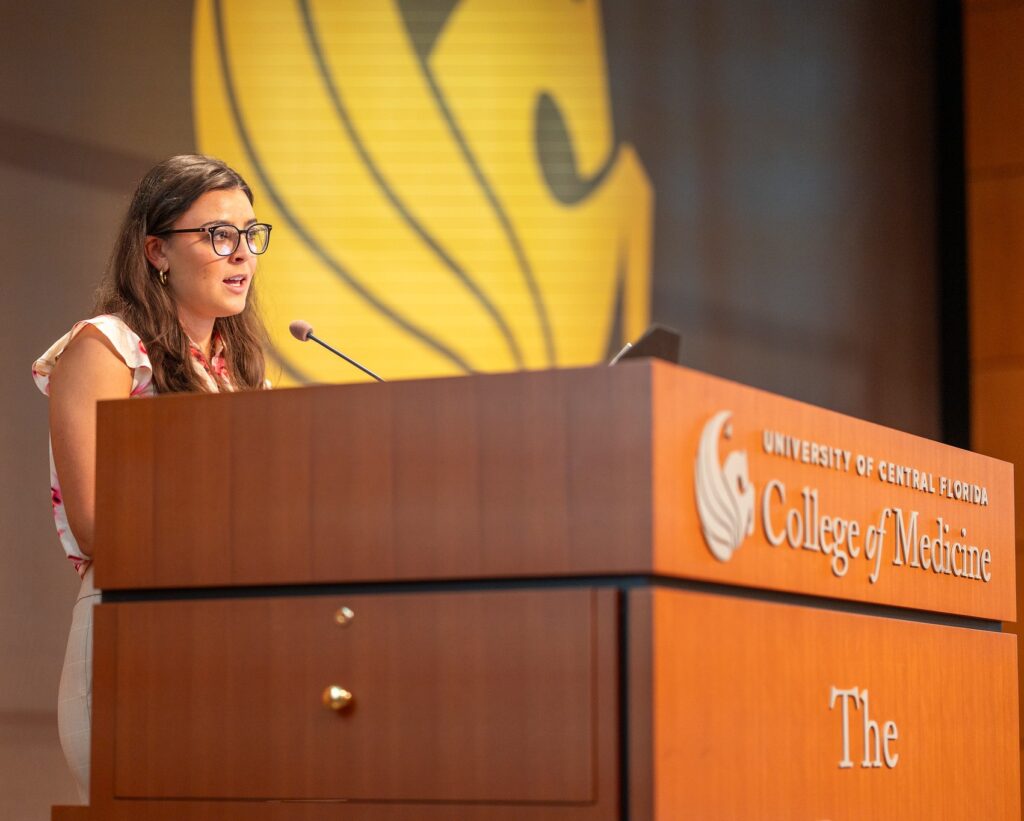
Such actions “are at the core of improving patient care,” said Dr. Shamol Williams, an academic physician at the Orlando VA who organized the event.
Dr. Deborah German, vice president for health affairs and founding dean of the College of Medicine, said such scientific inquiry is a key part of UCF’s focus on training tomorrow’s physicians. “The UCF doctor is always looking for the answers to the problems we haven’t yet solved,” she said.
Light Levels for Newborns
Stark is a resident physician at Nemours Children’s Health in Lake Nona, which also serves as the College of Medicine’s Department of Pediatrics. She examined light levels in the Neonatal Intensive Care Unit, which provides care to critically ill, premature and low birth-weight babies.
Premature infants are especially sensitive to light, and overexposure to the NICU’s bright lights can impact development of their circadian rhythm and other bodily functions. Stark found there was no standardized guidance for NICU lighting at the hospital, so her project provided ongoing education to healthcare professionals and parents about the issue. She focused on two areas – making sure to put covers over the isolettes that hold newborns and cycling light in the NICU so it mimics a natural day-night rhythm,
She began her project in February 2026. Today isolette cover usage is 100%, and light cycling is at 48%, up from zero, Stark reported. The hospital is continuing with education and reminders to staff and is pursuing formalizing the program.
“The UCF doctor is always looking for the answers to the problems we haven’t yet solved,” Dr. Deborah German
Abdo Asmar, who leads the Greater Orlando–Osceola Internal Medicine residency and helped organize the program, said improving care must include such educational and teamwork approaches to be effective. “Quality improvement is the work of closing the gap between what we know and what we do in healthcare by building cultures of teamwork, collaboration, and continuous learning,” he said.
GLP1 Therapy for Heart Failure
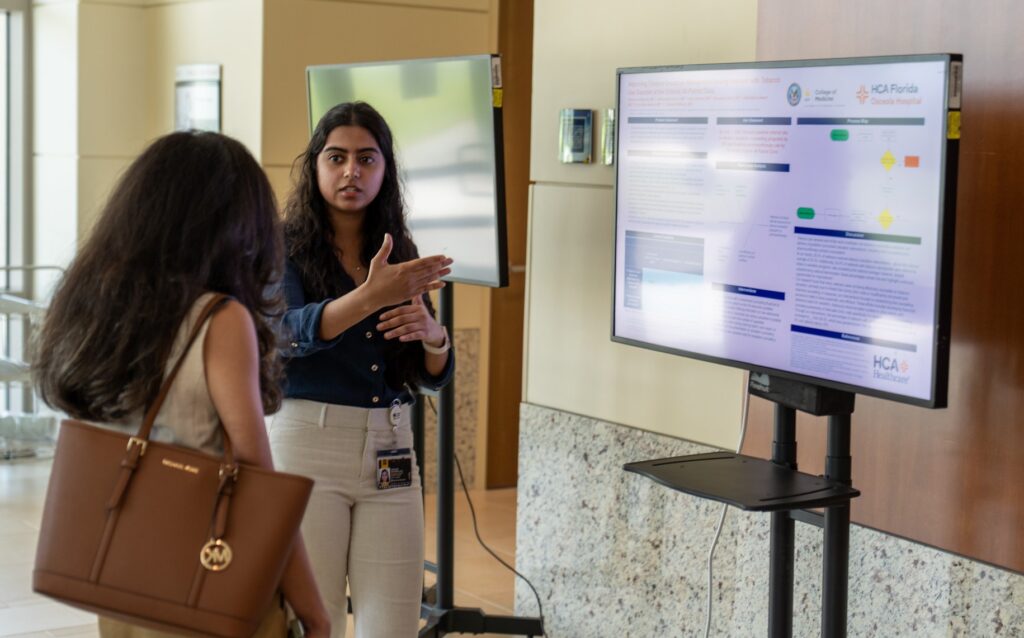
Tadros is a resident pharmacologist at the Orlando VA Medical Center who works in the cardiac unit with veterans suffering from heart failure. She will begin a full-time pharmacy career there on July 1.
She examined how VA pharmacists can develop a better process for prescribing GLP1 weight loss drugs to veterans with heart failure. In her study, the prescription not only helped patients lose weight, it also reduced their sleep apnea, shortened hospital stays and increased their motivation to exercise.
“Veterans have such a special place in my heart, because they have given so much,” she said. “Research like this expands your thinking. It makes you think out of the box and ask, “What can I do to improve their care?’”

Leading Healthcare with Love
Peter Pronovost, a world-renowned patient safety champion, researcher and entrepreneur, is chief quality and transformation officer at University Hospitals Cleveland Medical Center. The plenary speaker at the UCF event, he spoke of his career in creating a culture where everyone is united in improving care.
He said healthcare’s biggest challenge is, “We’ve forgotten love. We’ve forgotten how to solve complex problems together.”
He said healthcare leaders have focused on efficiency with a top-down approach rather than serving as coaches who inspire workers on the front lines to believe they have the power to improve patient care.
“Love says, ‘You matter, and because you matter, we will pursue excellence together,’” he said. “When people feel love, they speak up. Problems surface quickly so we solve more problems.”