A cell 500 times thinner than a human hair could heal hearts and kill cancer cells, thanks to a patent-pending technology created by a UCF researcher and now licensed to a university donor in hopes of getting it to clinical trials.
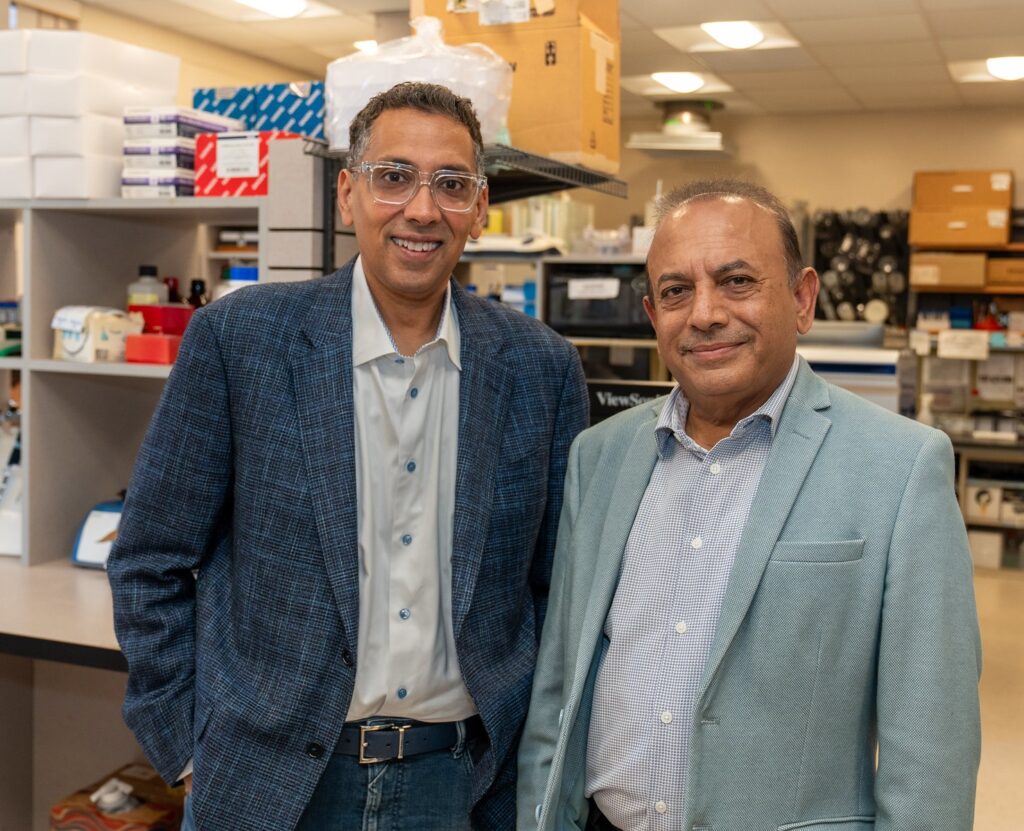
This innovative technology, for which UCF is seeking patent protection, places therapeutics inside exosomes and coats them with cell-specific markers that direct them to an exact area of the body to deliver the drug.
“I call these smart tiny bubbles,” Singla says. “Millions of people have heart disease, and they take multiple drugs in extremely high doses. But we have no way to be certain these drugs are getting to where they need to go. We need innovative technologies to get treatments exactly where they need to go to cure the problem.”
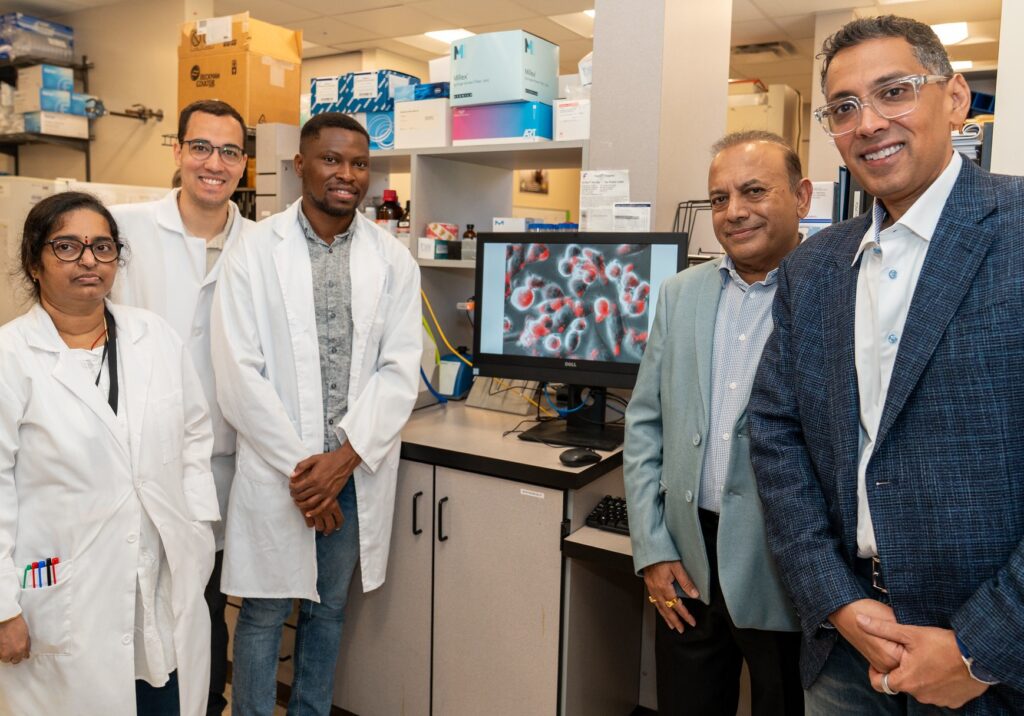
How the Therapy Works
This discovery is part of Singla’s work to provide therapies to treat and prevent heart disease, including heart damage caused by cancer treatments such as chemotherapy and targeted radiation to the chest. That heart damage seems to be caused by inflammatory factors that treatments use to kill cancer cells. Technology developed by Singla encapsulates anti-inflammatory heart treatments in exosomes and then delivers the drug to the exact area of heart damage.
As part of this research, Singla’s team also developed technologies to deliver cancer-killing drugs inside exosomes. They chose triple-negative breast cancer for their research, the deadliest form of the disease, with a 77%–78% five-year survival rate. In the lab, the therapy showed significant promise in killing cancer cells – at much lower doses that are used in chemotherapy – while also protecting the heart. So the exosome therapy could help cancer patients without the severe side effects of chemotherapy.
“These therapies can work hand-in-hand,” Singla said. “They can treat cancer and protect the heart.”
Financial Investment is Key for Drug Development
The next step will be manufacturing the therapy for clinical use and advancing into FDA clinical trials for heart disease and cancer treatment. To help accelerate that path, Singla partnered with Orlando investor and UCF donor Chakri Toleti, a healthcare technology entrepreneur focused on building category-defining businesses through AI and agentic platforms, biomedical innovation and ambient intelligence including most recently care.ai, which was acquired by Stryker in 2024.
Through his innovation fund, TCapital, Toleti backs transformative technologies designed to improve healthcare delivery and reduce human suffering at scale. Together, Singla and Toleti invested in and formed Exomic to fund continued research, clinical development, and commercialization of the technology.
Toleti says his passion for advancing cancer research is deeply personal after losing his father to the disease.
“This was an opportunity to do something truly innovative in cancer and cardiovascular treatment,” he says. “Dr. Singla’s work represents a fundamental shift toward new biomedical platforms not only in how targeted therapies are delivered in the human body, but in how we think about treatment and healing itself.”
Such public-private partnerships are one of the goals of UCF’s Office of Research, which drives innovation, enterprise, and collaboration across disciplines.
“Dr. Singla’s groundbreaking exosome delivery system perfectly exemplifies how university innovation translates into significant, life-saving benefits for society,” says Winston V. Schoenfeld, vice president for research and innovation. “As demonstrated by the creation of Exomic, industry partnership is essential for driving such pioneering technologies towards successful translation and real-world clinical use.”
The effort is also providing exciting learning opportunities for College of Medicine graduate students. Jonatas De Mendonca Rolando ’23MS ’26PhD earned his Ph.D. in biomedical sciences earlier this month. He is staying at UCF as a post-doctoral researcher to continue creating the exosome therapy.
He helped develop protocols and procedures for the delicate technology and saw its impact in the lab. He’s excited to have a financial supporter who can help take the therapy from lab to, he hopes, patients.
“It’s been amazing to part of a high-tech project and see leadership in science,” he says. “I am very excited for my future.”
Researcher Background
Singla is the AdventHealth Endowed Chair of Cardiovascular Sciences at the Burnett School of Biomedical Sciences and is a faculty fellow with the UCF Office of Research. He earned his bachelor’s and master’s degrees from Punjabi University, Patiala, India, and his Ph.D. from the Post Graduate Institute of Medical Education and Research, Chandigarh, India. He has published more than 100 peer-reviewed papers and has continually been funded by the American Heart Association and/or the National Institutes of Health since 2004.
About TCapital
TCapital is an AI, Frontier Tech and Life Sciences innovation fund investing in category-defining platforms and infrastructure. Founded by healthcare technology entrepreneur Chakri Toleti, T-Capital invests in companies shaping the future of treatment, care, and biomedical innovation. For more information, visit TCapital.com.