Neuropathy – chronic pain, numbness and tingling in the hands and feet – is a challenging fact of life for many patients with Type 1 diabetes.
Thanks to a new National Institutes of Health grant, a UCF College of Medicine scientist is investigating a new approach to treat neuropathy without relying on pain pills and anti-depressants.
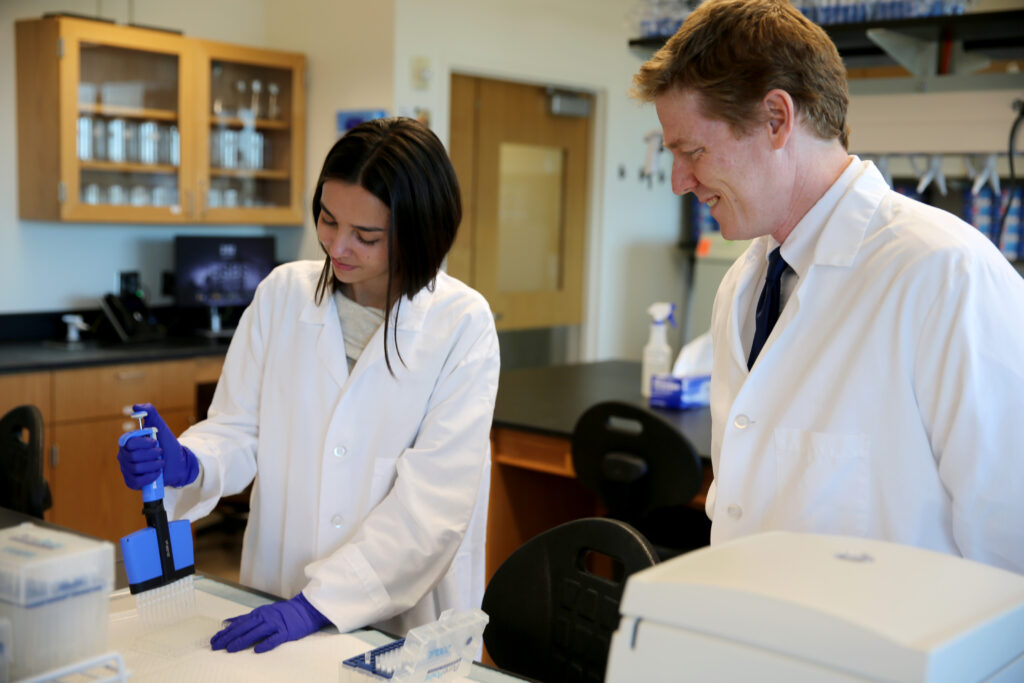
Assistant Professor Dr. Jim Nichols is focused on overlooked mechanisms in the body that may show how the inability to make insulin has “downstream” consequences in other areas, such as how the brain processes and registers sensation in the limbs.
People affected by Type 1 diabetes don’t produce insulin, the hormone that regulates blood sugar, so patients must inject themselves with insulin to survive.
Before joining UCF, Dr. Nichols spent many years looking for new causes of diabetic neuropathy. Dr. Nichols theorizes that irregularities in the insulin signaling pathway of peripheral nerves may be the key contributor to diabetic neuropathy. Based on the potential of his early findings, the National Institute of Diabetes and Digestive and Kidney Diseases, which is under the NIH, recently awarded UCF a $747,000 R00 grant to expand that research.
Discovering New Pathways
One of the challenges of living with diabetes is that patients with neuropathy may lose feeling in their extremities and not feel a cut, blister or injury. Those injuries can become infected and even lead to amputation. Such diabetic complications occur more frequently in patients with poor blood sugar control, so Dr. Nichols is hoping that his research will find a treatment to regulate and improve neuron signaling that can be used as part of improved blood sugar management.
“We’re diving into an area that’s fresh,” he said. “The research aims we’re going after are based on the insulin signaling pathway, and how the neuropathy evolves due to insulin dysregulation. Ultimately, we’re looking at different ways to alter the insulin signaling pathway to prevent nerve degeneration.”
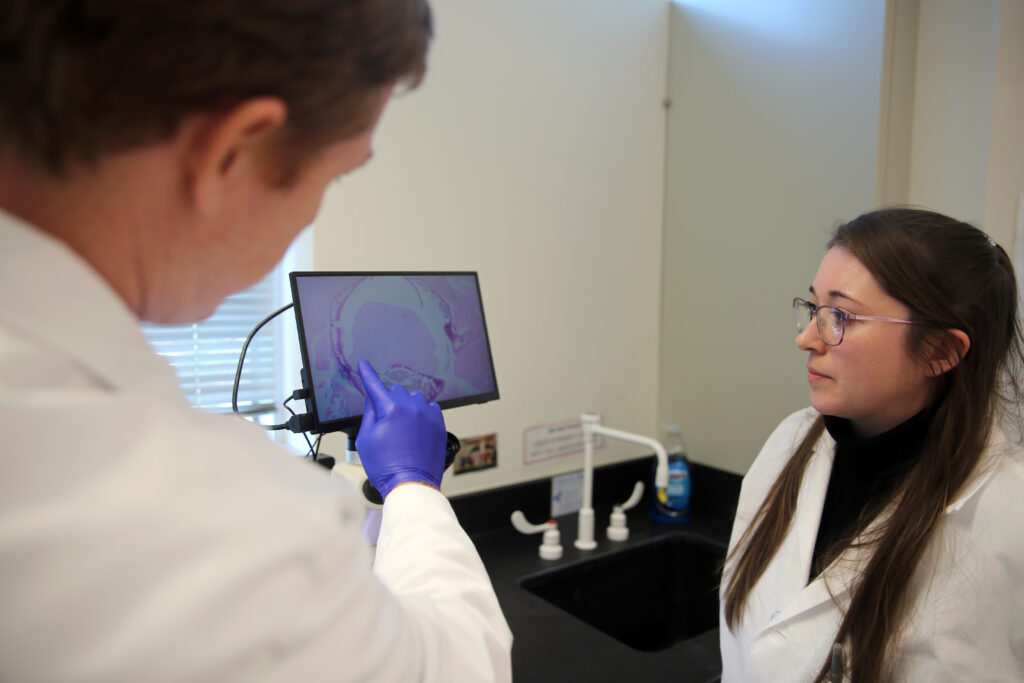
During the next three years, Dr. Nichols and his team will document the behavior of neurons, their signaling systems and surrounding cells to find ways to regulate them to alleviate symptoms of neuropathy.
While approved therapeutics such as opioids and antidepressants can curb those symptoms, Dr. Nichols hopes his investigational treatment can become a more viable alternative for diabetic patients.
“There are typical pain therapies out there, although we’re trying to move away from that because diabetic neuropathy isn’t very amenable to the basic treatments that we have,” he said. “We’re trying to find better therapies, and that is our goal.”
Inspired to Learn and Discover
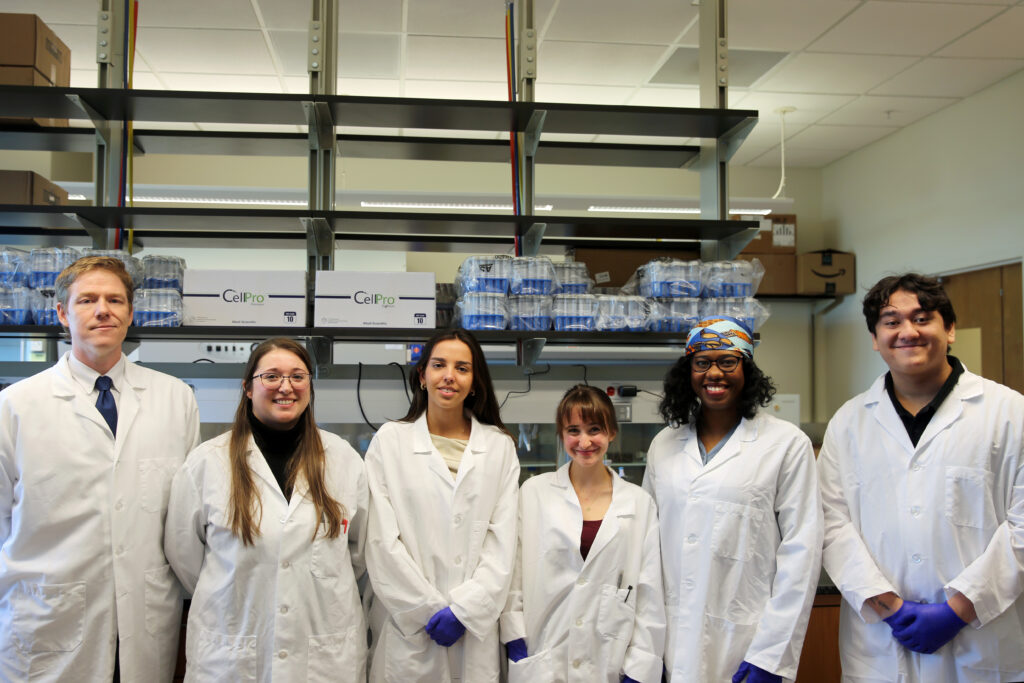
Dr. Nichols arrived at UCF in the summer of 2025, and said his goal is to inspire students to pursue bold new research directions. He encourages students to not fear the failures that lead to success.
“One of the things I tell the students is that we fail fast and we fail safe here,” he said. “What that means is that you want to fail as many times as you’re going to fail as fast as possible. You want to get those failures out as fast as possible so that you can learn as fast as possible without having an impact on you or your studies.”
Chisom Akaniru completed her master’s degree in biotechnology at UCF in 2024 after spending nearly five years working in the biomedical field in her home country of Nigeria. Now pursuing a Ph.D. in biomedical sciences, she joined Dr. Nichols’ lab because she wants to help patients like her parents, who both suffered from diabetes.
“This is personal to me because my mom was diabetic and she died from complications with it,” Akaniru said. “My dad now is showing signs of peripheral neuropathy. There are treatments for other comorbidities of diabetes, but I think it could go a long way to have something that could really help neuropathic pain better.”
Hollie Hayes graduated from UCF with her bachelor’s degree in biology in 2020 and then worked in neuroscience research before joining Dr. Nichols’ lab as a manager. During her time at UCF, she worked on research to fight pediatric tumors and still carries that inspiration today.
“It got me really interested in focusing on helping people who are just suffering with chronic, debilitating pain, and especially anything that comes with nerves,” Hayes said. “My focus is, ‘How can I help advance the science and help as many people as possible?’ ”
Researcher Credentials:
Dr. Nichols is a graduate of the Mississippi State University College of Veterinary Medicine dual degree program where he examined new therapeutics for multiple sclerosis while completing his veterinary training. He then worked as a postdoctoral research fellow at MD Anderson Cancer Center for five years where he explored pathological mechanisms of pain with a focus on diabetic peripheral neuropathy. After joining UCF in 2025, Dr. Nichols and his team continue to explore the underlying mechanisms of diabetic neuropathy.
Funding and Disclosure:
Research reported in this publication was supported by the National Institute of Diabetes and Digestive and Kidney Diseases of the National Institutes of Health under Award Number R00DK142197. The content is solely the responsibility of the authors and does not necessarily represent the official views of the National Institutes of Health.