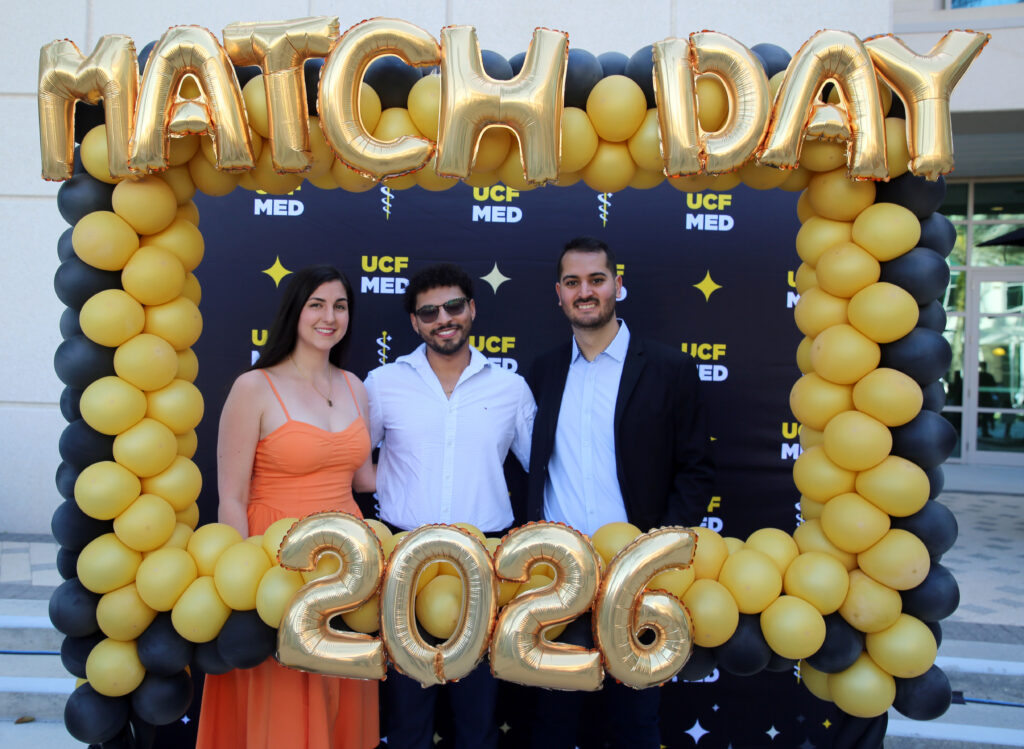
As a future emergency medicine physician, Anthony Martinez will provide care to all. And thanks to a new College of Medicine language certification program, he will be able to communicate even better with those patients in need.
Martinez is one of three UCF medical students who recently passed the national Physician Oral Language Observation Matrix exam, meaning he has demonstrated comprehension, vocabulary and pronunciation skills in Spanish to provide care to patients without an interpreter. Eleven more students are on track to take the national exam, and four others are awaiting results.
UCF is the first medical school in Florida offering the exam as part of a Spanish language program designed to improve patient care.
Data shows that communications problems are the most frequent root cause of serious patient safety events and patients with limited English language proficiency face higher levels of such risk. The College of Medicine chose Spanish as its language focus to meet the state’s healthcare needs. Twenty-two percent of Floridians speak Spanish as their primary language at home and that rate makes Florida one of the top three in Spanish speakers of all U.S. states.
“When the care team and the patient share a common language, something important happens,” said Dr. Analia Castiglioni, assistant dean and director of the Spanish language program. “Trust develops more quickly, patients share more complete information, and care becomes safer and more compassionate. The exam represents a meaningful milestone because it validates that a student can provide safe, language-concordant care in clinical settings.”
Martinez considered himself a native Spanish speaker but at home he never learned medical or anatomical terms. He said his medical Spanish will enhance how he interacts with patients through his emergency medicine residency at Orlando Health.
“This means everything to me,” Martinez said of his match. “I’m close to my family and I’m training at one of the best programs in the country. I’m definitely going to be using my Spanish in emergency medicine and as I meet and practice with patients, it’ll only get better.”
Real-World Practice
Students can take the medical Spanish electives in the summer before their second year of medical school, before they go into clerkships at hospitals and clinics, and/or in their fourth year. In addition to formal Spanish language education, they practice obtaining patient histories and provide treatment plans in Spanish with standardized patients in the College of Medicine’s Clinical Skills and Simulation Center. Every patient encounter is taped and evaluated by Brenda Perez, who is a Certified Healthcare Interpreter™ in Spanish, the medical curriculum program manager at the College of Medicine and a casual Spanish interpreter at Nemours Children’s Hospital in Lake Nona.
The college hopes to expand the program to continue meeting the community’s needs.
“My vision is for the program to continue growing,” Dr. Castiglioni said. “That means building strong partnerships with clinical sites that serve Spanish-speaking communities and creating opportunities for our students to rotate in those settings, where their language skills can directly enhance patient care.”
Communicating and Caring
Fourth-year medical student Rodolfo Rodriguez came to Florida from South America when he was young and spoke Spanish and English at home. But while he is bilingual, he needed to learn medical Spanish to be a more effective physician.
“Household Spanish is much more casual and you’re not using terms that are prevalent in the medical field,” Rodriguez said. “There are also words that don’t directly translate the same, like ‘stroke.’ In Spanish, you wouldn’t say ‘stroke’ you’d say ‘accidente cerebrovascular’ which literally means ‘cerebrovascular accident.’”
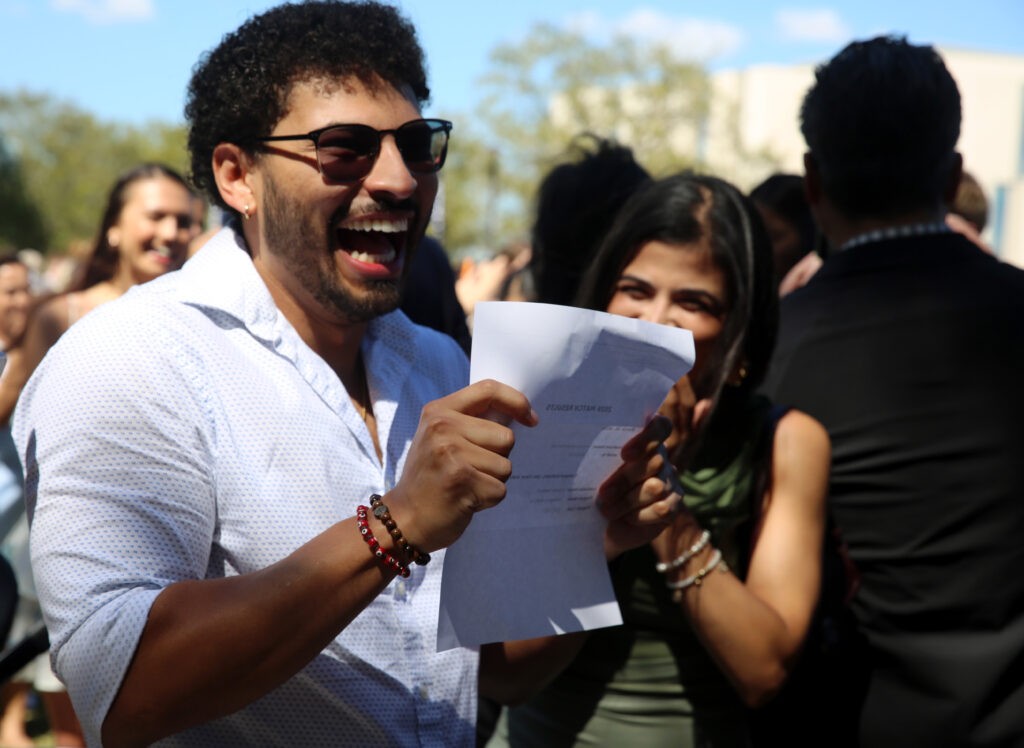
He wanted to specialize in rehabilitative medicine after witnessing his father recover from a motorcycle accident. Last week, he matched into the University of Miami’s physical medicine and rehabilitation program.
“I’m overjoyed, and I know my dad is too,” he said. “Many people here in Florida don’t speak English as a first language, so being able to use my medical Spanish to help these patients feel comfortable through the rehab process is something I’m deeply passionate about. I’m going to really be able to connect with my patients here so much better, and I know that will make a difference.”
Fourth-year M.D. candidate Elizabeth Durkin is not a native speaker but studied Spanish throughout her education. She passed the national certification, and this summer will begin her neurology residency in Neurology at HealthONE in Englewood, CO..
As a child, she translated medical information into Russian for her grandparents every time they visited the doctor.
“It was a unique opportunity to help them when I knew they were feeling vulnerable,” Durkin said of the challenges non-English-speaking patients face when their physician doesn’t speak the same language. “As I entered medical school and my clinical years, I noticed a similar need in so many patients I worked with.”
She said UCF’s structured program helped strengthen her skills and she wants to continue building her communication skills so her patients can get the help she gave to her grandparents.
“In medicine, communication is so vital to help your patients feel comfortable,” she said. “Being able to speak directly with non-English speaking patients has been a goal of mine for a long time, and I’d like to say I did this to honor my family and my grandparents.”
College of Medicine students interested in learning more about the medical Spanish program may email commedspanish@ucf.edu.