Surgery Clerkship Orientation Module
Patient Care
SU-3801: Perform comprehensive and focused history and physical examinations appropriate for the clinical context and illness acuity of the patient in surgical setting (PC1 & PC2)
SU-3802: Perform an organized oral presentation and document acute and continuity of care surgical patient encounters (PC3 & PC4).
SU-3803: Select and interpret diagnostic and screening tests. Develop a prioritized problem list and differential diagnosis based on the history and physical exam findings, results from diagnostic studies, and the medical record (see required clinical experiences) (PC5 & PC6).
SU-3804: Develop management plans informed by current evidence and each patient’s unique characteristics, modifiable health risks, values, and beliefs for patients in surgical settings (PC7).
SU-3805: Obtain informed consent for and participate in/perform surgical procedures appropriate for the level of training (PC8).
Knowledge for Practice
SU-3806: Demonstrate an inquiry-oriented and analytic approach integrating clinical decision-making tools to generate problem lists and hypothesis, and prioritize differential diagnosis in surgical setting (KP1 & KP4)
SU-3807: Apply principles of public health, epidemiology, and biostatistics to diagnose, manage patients in surgical settings (KP2)
Interpersonal Communication Skills
SU-3808: Communicate in well-organized oral presentations and written documentation effectively with colleagues, other health care professionals, or health related agencies using appropriate audience language to ensure understanding (ICS1).
SU-3809: Demonstrate effective patient and family communication by eliciting their concerns, needs, and preferences and incorporating them in the management plans though shared decision making. (ICS2)
SU-3810: Demonstrate sensitivity to the emotional and cultural needs of patients and families by communicating effectively in surgical settings (ICS3)
Professionalism
SU-3811: Demonstrate respect, honesty, integrity, reliability and responsibility in all interactions (including patients, families, colleagues, and other professional contacts) with attention to cultural background. (PROF1 & PROF2).
SU-3812: Demonstrate ethical behavior and learning about and complying with relevant laws, policies, and regulations for the care of patients in this clinical setting (PROF4)
SU-3813: Demonstrate understanding of the impact of healthcare disparities on surgical patient care while caring for surgical patients. (PROF5)
System-based Practice
SU-3814: Demonstrate collaborative work in inter-professional teams to enhance the quality of surgical patients’ care. Participate in patient hand-offs, discharge planning, patient-related correspondence, patient safety, and involvement of consultants in the surgery setting. (SBP1)
SU-3815: Identify available community resources that are beneficial in caring for surgical patients. Observe and/or participate in systematic approaches to promote safe patient care delivery in the surgery care settings. (SBP3).
Practice-based Learning and Improvement
SU-3816: Analyze and identify strengths and weaknesses in knowledge and skills through critical reflection, and self-evaluation. Incorporate feedback and self-directed learning (PBL1 & PBL3).
SU-3817: Engage in locating, critically appraising, and assimilating medical evidence from a variety of sources to contribute to the care of patients in this clinical setting (PBL2)
Personal and Professional Development
SU-3818: Develop lifelong learning skills, including self-reflection and self-regulation, to advance professional growth and meet personal and clinical responsibilities. (PPD1)
Interprofessional Collaboration
SU-3819: Demonstrate effective communication with peers and other health care professionals in a responsive and responsible manner that supports a collaborative approach to patient care. (IPC1)
SU-3820: Understand and respect the expertise, roles and responsibilities of, and work effectively with other healthcare team members. (IPC3)
Surgical Patient Log & Direct Observation Requirements:
Patient Log:
Students must complete the following list of required Patient Types, Clinical Conditions and Skills during the course of the clerkship.

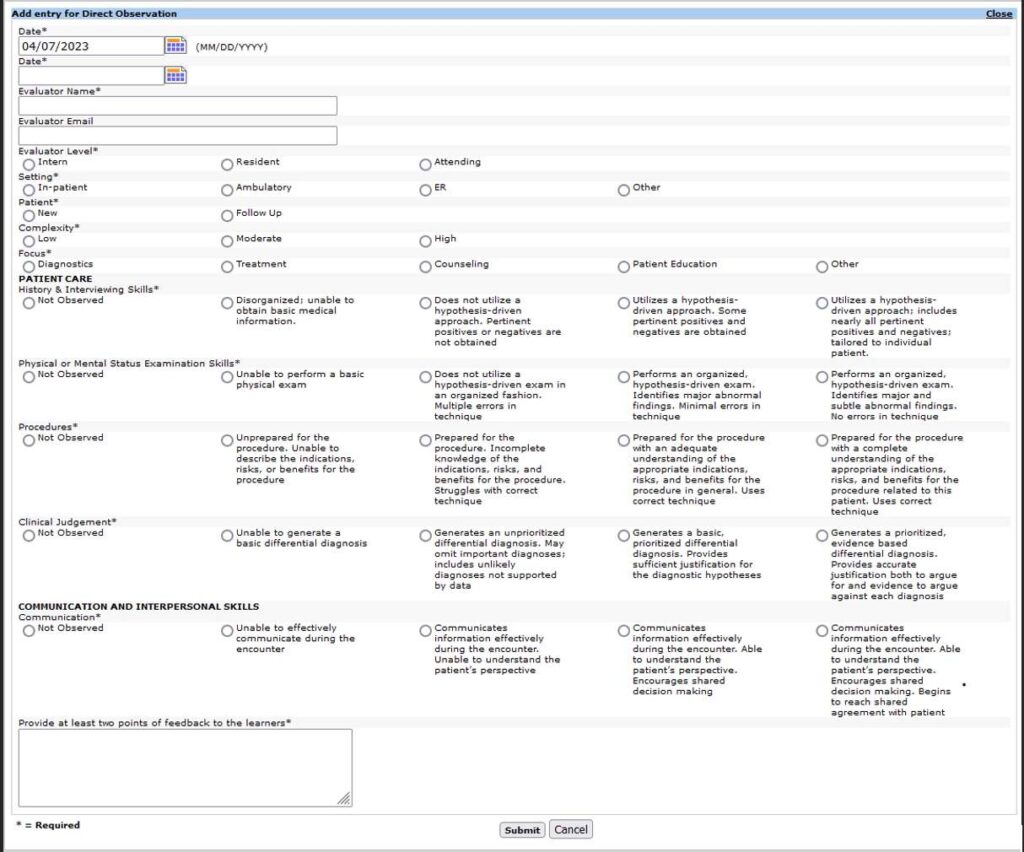
Direct Observation Card:
Direct observation by a COM-appointed faculty Attending or Resident physician is part of clerkship education and must be documented. The student will obtain sign-off of direct observation in both the Core and Selective rotations, and a total of 4 observations will be documented in Oasis. Students will be evaluated on one or more of the following categories: History & Interviewing Skills, Physical or Mental Status Examination Skills, Procedures, Clinical Judgment, and/or Communication. Not all categories must be completed during an observation.